

For years, food systems have followed a linear path from producer to consumer: produced, packaged, transported, sold, and consumed. Yet, the waste generated at the end of this chain—whether post-harvest residues or excess consumption—often ends up in landfills, unused. Nature, however, teaches us something different: nothing is truly waste; everything is part of a cycle.
This is where regenerative agriculture steps in, emerging as both an environmentally friendly and economically sustainable approach. It creates a new cycle, not at the end of the food supply chain, but at its beginning: from waste to soil, and from soil back to production.
What Is Regenerative Agriculture?
Regenerative agriculture is a circular farming model encompassing food production, processing, consumption, and waste management. Its goal is not to eliminate waste but to transform it into a resource. In this model, waste is not a cost but an input that enhances efficiency. Core principles:- Composting organic waste to return it to the soil
- Transforming by-products of food production (fruit peels, pulp, stalks) into agricultural inputs
- Reducing water consumption and using gray water systems in agriculture
- Improving energy efficiency and minimizing carbon emissions
A Second Life for Peach Pulp
Imagine a fruit juice factory. Tons of fruit are processed daily, leaving behind tons of pulp. Instead of being discarded, this pulp:- Is turned into compost
- Is used as a soil conditioner
- Is converted into animal feed
- Can even be utilized in biogas production
Circularity in the Supply Chain: A New Definition of Corporate Responsibility
For brands, regenerative agriculture is not just about environmental sensitivity; it also signifies reputation, innovation, and competitive strength. Today, many food and agriculture companies:- Redirect unsold products to composting centers
- Reduce packaging waste and transition to biodegradable materials
- Develop new products by using agricultural waste in R&D processes
- Incorporate a “from waste to soil” perspective into the supply chain, moving beyond “farm to fork”
Soil Empowered by Recycling, a Resilient Future
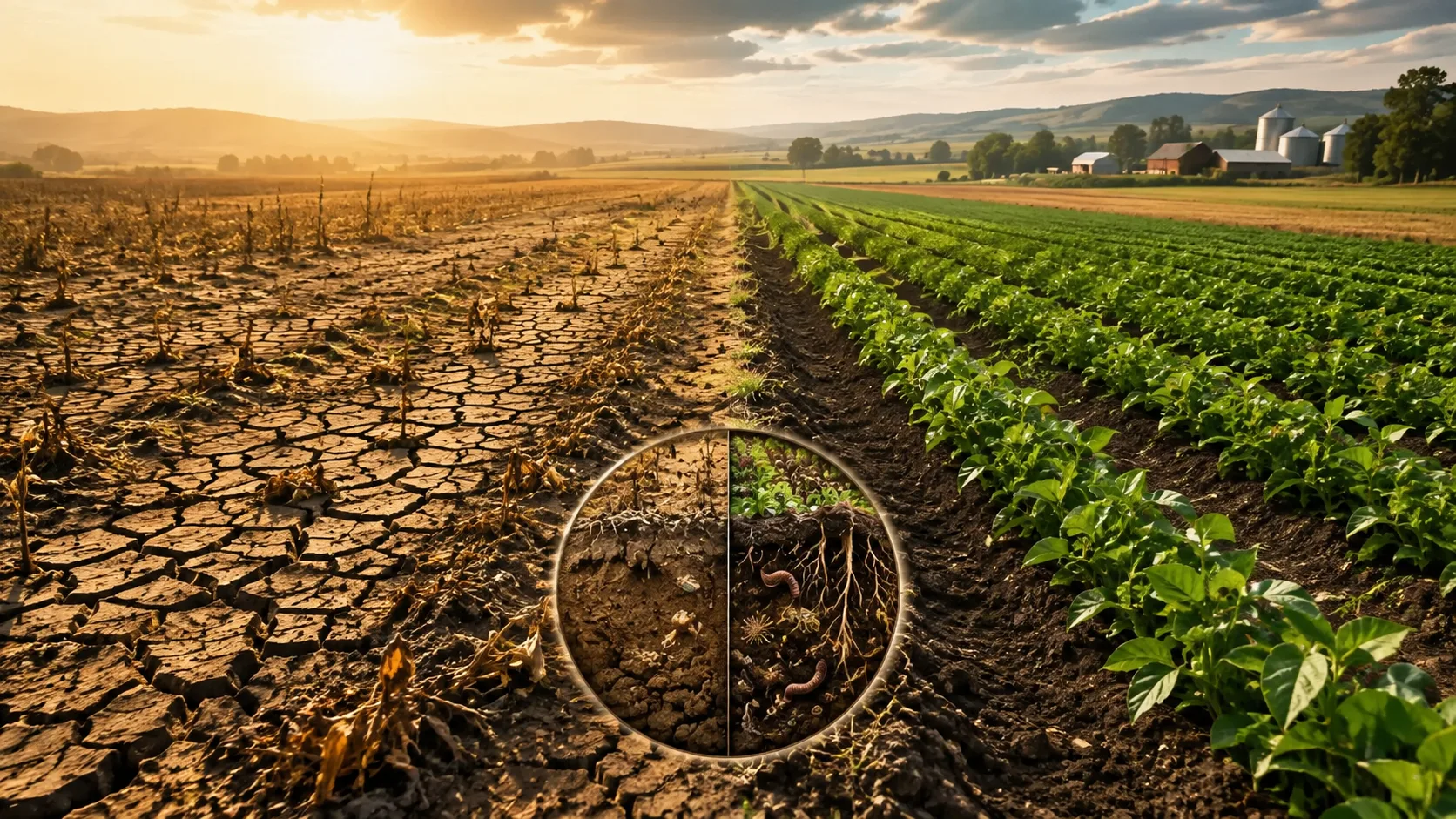
Soil is nourished not only by the crops grown on it but also by the inputs it receives. Regenerative agriculture sees these inputs not as waste but as restorative elements. Compost in the soil:- Increases organic matter
- Enhances water retention capacity
- Nourishes microorganisms
- Reduces erosion and the need for chemicals
From City to Village, a Model Applicable from Small to Large Scale
Regenerative agriculture is not just for large-scale companies; it’s a model that small producers, municipalities, cooperatives, and even individuals can adopt.- Compost bins in homes
- Waste processing facilities established by cooperatives
- Municipalities donating organic waste to farmers
- Restaurants delivering their waste to local farmers
 What Is Pickle Juice — and What Is It Good For?
 Soil Fatigue: The Silent Threat to Productive Agriculture
 From Clay to Jar, From Steel Tanks to Modern Tables: The Evolving Journey of Pickle
 The Farmer’s New Assistant: AI-Powered Agricultural Decisions
 The Journey of a Drop of Water: The Importance of Water Efficiency in Food Production
 The Return of Fermented Cultures: Why Are Traditional Flavors Rising Again?